

Static constraints
Simio Advanced Planning and Scheduling (APS Software)
Simio Discrete Event Simulation Powered Advanced Planning and Scheduling (APS) leverages Intelligent Adaptive Process Digital Twin technology to perform real-time, synchronized, risk-based dynamic scheduling. This state-of-the-art approach transforms traditional planning challenges into strategic advantages by creating virtual replicas of your entire production environment. Digital twin planning and scheduling enables feasible plans and schedules for manufacturing, warehouse, and supply chain execution across all relevant time ranges, ensuring that all operations are resource-capacity, material, and timeline feasible.
.svg)
Why Simio for APS?
Using Simio Intelligent Adaptive Process Digital Twins to perform Advanced Planning and Scheduling (APS) enables real-time analysis through sophisticated what-if simulations. This powerful digital twin planning capability helps you make decisions that ensure your business meets its commitments by effectively managing unexpected disruptive events such as machinery breakdowns, material shortages, and unplanned orders. Simio’s agile platform for developing Intelligent Adaptive Process Digital Twins allows you to easily build data-generated simulation models without coding, fully capturing detailed constraints, business rules, and decision logic within your system.
Digital twin scheduling represents both discrete events and flow processes within the same model, while realistic 3D animation provides an engaging visual representation of your entire operation. With powerful AI-enabled optimization at your fingertips, you can freely experiment with operational scenarios, facilitating detailed what-if analyses that result in comprehensive insights into system performance. This robust digital twin approach empowers your teams to make informed decisions and maximize business KPIs through accurate simulations of future operational states.
Absolute Feasibility
- Simulation-based architecture: Simio Advanced Planning and Scheduling operates with a Discrete Event Simulation-based, object-oriented, 3D architecture that ensures planning/scheduling that are material, capacity, demand and timeline feasible through the use of its intelligent digital twin technology.
- Dynamic virtual replicas: Process Digital Twins incorporate dynamic digital replicas of the processes, equipment, people, and devices that make up factories, warehouses, and supply chains—creating a comprehensive virtual testing ground for what-if scenarios.
- Intelligent resource modeling: System resources in Process Digital Twins not only have busy, idle, and off-shift states, but they are also modeled as objects that exhibit behavior and move around the system. These resources interact with other objects to fully replicate the behavior and detailed constraints of real-world operating environments.
- Real-time decision making: Production scheduling decisions are made at the exact event time when resources and materials are required. Dynamic dispatching rules and detailed process logic are then applied to decide the next order to process and which resources to use.
- Synchronized operations: Absolute operational feasibility is ensured by fully synchronizing all material and resource requirements with the actual event timeline for each operation through accurate digital twin simulation.
Accurate & Verifiable Results
- Comprehensive solution: Simio Advanced Planning and Scheduling ensures predicted performance results are accurate and verifiable through the application of Process Digital Twins. These intelligent digital twins incorporate all physical constraints, business rules, operating procedures, safety protocols, and operational decision logic required to effectively operate factories, warehouses, and supply chains.
- Preventive maintenance planning: Minimize the impact on performance due to preventive maintenance and specific operational requirements by intelligently planning for it through what-if scenario simulation and digital twin planning/scheduling.
- Throughput optimization: Improve throughput while maintaining schedule feasibility by making operational decisions based on expert insights generated from digital twin simulations focused on mission-critical factors such as resource utilization and material availability.
- Future state visibility: Digital twin scheduling provides unprecedented visibility into future operational states, allowing managers to validate plans before implementation to reduce the overall risk of meeting the business KPIs.

Fast Runtimes
- Efficient simulation engine: Simio Advanced Planning and Scheduling operates with Process Digital Twins, powered by fast and efficient Discrete Event Simulation—essential for rapid what-if scenario testing.
- Comprehensive solution: Simio Advanced Planning and Scheduling ensures predicted performance results are accurate and verifiable through the application of Process Digital Twins. These intelligent digital twins incorporate all physical constraints, business rules, operating procedures, safety protocols, and operational decision logic required to effectively operate factories, warehouses, and supply chains.
- Preventive maintenance planning: Eliminate unplanned downtime due to preventive maintenance and operational requirements by planning for and expecting everything through what-if scenario simulation and digital twin planning.
- Throughput optimization: Improve throughput while maintaining schedule feasibility by making decisions based on expert insights generated from digital twin simulations focused on mission-critical factors such as resource utilization and material availability.
- Future state visibility: Digital twin scheduling provides unprecedented visibility into future operational states, allowing managers to validate plans before implementation.

Rapid Model Creation & Automatic Updates
- Templatized model objects: All Process Digital Twin model objects and properties are templatized to be data-generated and data-driven, enabling rapid model creation and minimizing long-term support requirements.
- Adaptive digital twins: Process Digital Twins automatically adapt to changes in enterprise data, ensuring current state and minimizing long-term maintenance of your digital twin planning system.
- No-code development: No coding is required to build Simio Process Digital Twins, dramatically reducing implementation time and technical barriers.
- Customizable libraries: Industry and company specific templates and libraries can easily be created, allowing digital twin technology to be tailored to your specific operational requirements.

Bucketless Planning
- Continuous planning horizon: Simio Advanced Planning and Scheduling supports bucketless planning, enabling the generation of rolling plans/schedules over any selected time horizon through continuous digital twin simulation.
- WIP-initialized simulations: Simulations of operating environments are always initialized with current work-in-progress and optimized related to tasks and materials on a continuous timeline to ensure continuity across current operations between planning periods.
- True production representation: Digital twin scheduling eliminates arbitrary time buckets, providing a more accurate representation of your actual production environment and enabling true what-if scenario testing.
Fully Transparent “Glass Box” Approach
- Transparent planning process: Simio Advanced Planning and Scheduling employs a “Glass Box” approach to the process of generating plans/schedules — rather than a “Black Box” approach. This ensures that operational parameters and resource settings are clear to the business and can be tested, validated, and supported by operations.
- Actual resource loading: Plans/schedules are based on the actual current resource loading across the system at all times, with digital twin technology providing complete visibility into the decision-making process.
- Understandable business rules: A “Glass Box” approach means that business rules and operational decision logic can be easily understood within the digital twin, and therefore can be challenged and evaluated for their impact and value.
- Transparent decision making: Digital twin planning provides stakeholders with clear visibility into how decisions are made as well as the impact based on clear KPIs, building trust in the system to facilitate ongoing continuous improvement.
The Power of What-If Simulation in Digital Twin Planning
Digital twin technology transforms production planning and scheduling by creating a virtual replica of your entire operation—from equipment and processes to workers and materials. This revolutionary approach enables true what-if scenario testing before implementation. By leveraging an intelligent digital twin, organizations can:
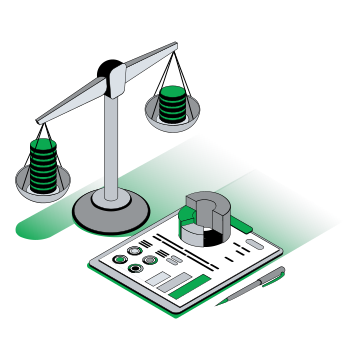
Test production strategies
Simulate the impact of different production strategies before committing resources to implementation.
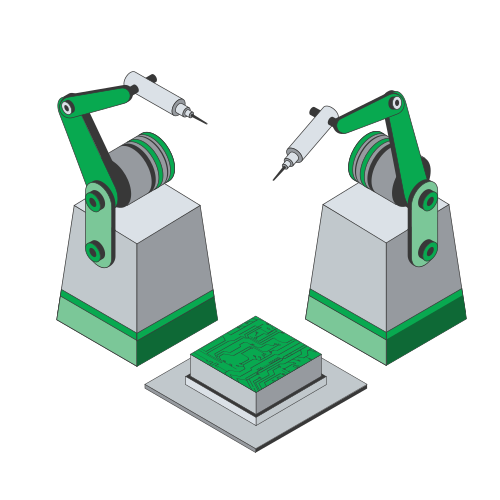
Evaluate equipment changes
Test the effects of adding or reallocating equipment in a risk-free virtual environment without disrupting actual operations.
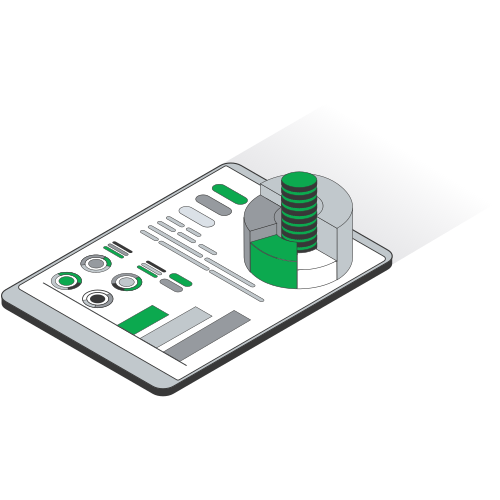
Optimize workforce allocation
Predict how changes in staffing, shifts, or skill distributions will affect throughput and production efficiency.

Plan for disruptions
Analyze the ripple effects of unexpected disruptions and develop robust contingency plans before problems occur.

Refine production sequences
Optimize production sequences to minimize changeover times and maximize efficiency across your entire operation.

Balance competing priorities
Balance competing priorities and constraints to achieve optimal business outcomes aligned with strategic objectives.
The digital twin approach to planning and scheduling represents a paradigm shift from traditional methods. Instead of relying on static calculations or simplified models, Simio’s digital twin technology captures the complex, dynamic nature of real-world production environments. This comprehensive simulation capability ensures that plans are not only feasible but optimal across all relevant dimensions of your operation.
Core Digital Twin APS Capabilities
Risk-Based
- Stochastic simulation: Simio’s APS engine uses stochastic Discrete Event Simulation technology for comprehensive forward-looking assessment of expected production performance.
- Variability modeling: The intelligent digital twin accounts for risk associated with variability and random events to ensure generated schedules will meet performance expectations.
- Risk quantification: What-if simulation capabilities provide realistic assessment of potential operational risks before they impact actual production.

Data-Generated
- Intuitive interfaces: Simio provides both a traditional point-and-click user interface and a data-generated, data-driven approach for building digital twins.
- Accelerated development: The data-driven approach speeds model creation for complex scenarios and facilitates model reuse across the organization.
- Scalable architecture: Data-generated models support scaling to new sites, multi-site applications, and end-to-end supply chains with minimal additional effort.

Scalable Deployments
- Flexible deployment options: Simio offers multiple deployment approaches, including cloud-based solutions, to maximize access for all stakeholders.
- Enterprise accessibility: Both internal and external stakeholders can leverage digital twin technology for Simulation, Planning & Scheduling, and Shop Floor Orchestration.
- Broad organizational reach: Deployment flexibility ensures digital twin planning and analysis benefits can be realized throughout your entire organization via any web-enabled device.
AI-Enabled
- Neural network integration: Simio supports training, testing, and embedding Deep Neural Network agents into Process Digital Twin models.
- Machine learning compatibility: Bidirectional interaction with Machine Learning algorithms enhances model intelligence and optimizes simulation results.
- ONNX format support: Direct import and use of AI Agents through the widely supported ONNX format supports the creation of truly intelligent digital twins.

Integrations
- Comprehensive connectors: Simio’s architecture includes bidirectional database connectors, support for Excel and CSV files for seamless data exchange.
- API connectivity: Web APIs enable cloud, enterprise system (ERP/MES), and IoT device integrations to create a connected digital ecosystem.
- Programming interfaces: Support for C#, Python, and SQL provides complete flexibility for custom integration development.

Object-Oriented
- No-code development: Build comprehensive digital twin models using intelligent out-of-the-box object libraries without writing code.
- Library extensibility: Easily expand object libraries through subclassing and creating custom user- and industry-specific objects.
- Hierarchical modeling: Any Simio model can be used as an object in another Simio model, facilitating reuse and multi-level system representation.

Templates
- Application-specific libraries: Simio provides pre-built templates containing predefined objects, process logic, and data schemas for common scenarios.
- Rapid implementation: Templates jump-start digital twin model development for complex operational processes, reducing time-to-value.
- Customization options: Each template is fully customizable to fit specific user requirements while maintaining the underlying simulation logic.

3D Visualization
- Multi-dimensional visualization: Process Digital Twin models are true digital twins in both operational accuracy and visual detail.
- Advanced visual capabilities: 3D, GIS, and VR capabilities provide powerful visualization options to enhance understanding of complex systems.
- Comprehensive reporting: Extensive data reporting, Gantt charts, and dashboards validate model behavior and showcase operational performance.
Benefits of Simio’s Approach
.webp?width=300&name=AdobeStock_733799921_WhyDES-scaled-e1724256805402%20(1).webp) Visualize & Understand the System
Visualize & Understand the System
- Create accurate, dynamic models: Develop comprehensive models that capture all operational rules and decision logic for complete system representation
- Enable stakeholder visualization: Provide clear visual interfaces that help all stakeholders understand complex process parameters and system behaviors
- Utilize 3D animation: Communicate system behavior effectively through interactive 3D visualization that reveals operational dynamics
- Build shared understanding: Establish a common operational perspective across teams by creating visual models of current and proposed operations
- Identify improvement opportunities: Enhance visibility into system performance to uncover optimization potential through comprehensive digital visualization
Digital twin simulation creates a virtual replica of your physical systems that updates in real-time with operational data. This visual representation helps teams develop a shared understanding of how systems work and where improvements can be made.
 Reduce New Implementation Risks
- Test designs virtually: Evaluate new designs and processes in a risk-free digital environment before physical implementation begins
- Identify potential issues: Discover and resolve operational challenges before they impact actual systems
- Quantify expected benefits: Calculate precise performance improvements from proposed changes through detailed simulation results
- Build stakeholder confidence: Develop trust in implementation decisions through visual demonstrations of expected outcomes
- Reduce implementation costs: Minimize the time and financial resources associated with system implementation through simulation-based validation
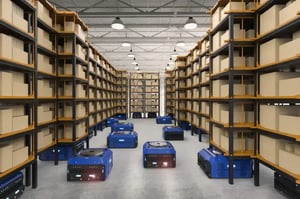
Simulation software like Simio helps mitigate implementation risks by allowing you to test changes in a virtual environment first. The benefits of a simulation-based digital twin include improved decision-making, reduced operational risks, and optimized performance.
 Analyze & Optimize Performance
- Measure key performance indicators: Track critical KPIs across multiple scenarios to identify optimal configurations
- Identify system bottlenecks: Locate constraints that limit overall system performance through detailed simulation analysis
- Test improvement ideas: Evaluate potential enhancements in a risk-free virtual environment before implementation
- Optimize resource allocation: Maximize utilization of critical resources through data-driven simulation insights
- Evaluate objective trade-offs: Balance competing priorities by understanding performance impacts across different scenarios
Through what-if analysis simulation, teams can test multiple scenarios without disrupting actual operations. This capability allows for continuous improvement based on data-driven insights rather than intuition or guesswork.
 Evaluate & Analyze Alternatives
- Compare design alternatives: Objectively assess multiple design options through consistent performance metrics
- Quantify performance differences: Measure precise operational variations between competing configuration options
- Understand sensitivity factors: Determine how results respond to changes in key assumptions and input parameters
- Make data-driven decisions: Select optimal configurations based on comprehensive simulation results
- Document selection rationale: Create clear records explaining the evidence-based reasoning behind chosen alternatives
By implementing a digital twin, organizations can evaluate alternatives with current operational data, ensuring decisions are based on the most up-to-date information available.
 Improve System Design & CapEx Deployment
- Optimize facility layouts: Design efficient process flows and physical arrangements through simulation testing
- Right-size equipment and staffing: Determine optimal resource levels based on simulated operational demands
- Validate design requirements: Confirm that proposed designs will meet performance specifications before implementation
- Maximize capital investment returns: Ensure the highest possible ROI on infrastructure and equipment investments
- Avoid unnecessary expenditures: Prevent over-engineering and excessive spending through evidence-based decision making
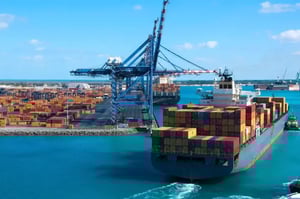
A Simio intelligent digital twin combines simulation capabilities with AI to enable predictive analysis and autonomous optimization. This approach ensures that new system designs are not only effective at launch but can also adapt to changing conditions over time.
 Understand the Impact of Variation
- Model realistic variation: Represent actual system variability using appropriate statistical distributions
- Analyze performance effects: Quantify how operational variation influences overall system performance
- Identify critical variation sources: Determine which sources of variability have the most significant impact on results
- Develop mitigation strategies: Create approaches to minimize the negative effects of unavoidable system variation
- Build robust operational systems: Design processes that perform effectively despite inherent uncertainty and variability
When comparing digital twin vs simulation approaches, the key difference lies in how they handle real-time data integration and associated model adaptation. While traditional simulation uses historical data and statistical distributions, digital twins incorporate live data feeds to create and adapt simulation models automatically that reflect current conditions more accurately.
 Continuously Explore Process Improvements
- Create virtual testing environments: Establish digital sandboxes for evaluating improvement ideas without operational disruption
- Engage stakeholders in optimization: Involve cross-functional teams in the improvement process through interactive simulation
- Quantify improvement benefits: Calculate expected performance gains from proposed process enhancements
- Prioritize improvement initiatives: Rank potential improvements based on their simulated value and implementation feasibility
- Implement changes confidently: Execute process modifications with certainty based on comprehensive simulation validation
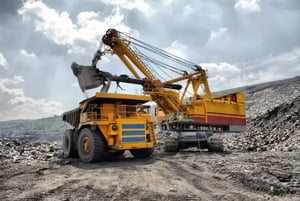
By deploying digital twin technology, organizations enable ongoing optimization as conditions change, creating a continuous improvement cycle driven by real-time data, AI and advanced analytics.
.svg)
User Feedback

Jarrod ThomeManager of Process Design & Simulation Modeling, McDonald’s
“Our customers want both choice and speed. By understanding where our customers’ expectations are going, and by leveraging rapid modeling with Simio, we are prepared to tackle this challenge.”
Jonathan MillerIndustrial Engineer & Simulation ModelerAlcoa
“The Simio Digital Twin is now used 24/7 to generate plans that are accessible to all. These plans are used in daily management meetings to establish the strategy. The Simio Digital Twin model has now been run over 65,000 times to generate plans. It is equivalent to running the model every hour for over 7 years.”
J. Spencer WilliamsFounder, President & CEORetirement Clearinghouse
“Frankly, I’ve been stunned that every time we came up with a new question or level of complexity that we needed to account for in the simulation, the Simio software answered the bell and responded to our needs.”
Thomas LewisAssociate Director – Business Insight & AnalyticsBristol Myers Squibb
“Across our sites we have multiple Simio users of varying skill level, and we have been able to successfully hand-off models to local teams with guided instructions for how to make conceptual level model changes through data-driven inputs. We view Simio’s data-driven and data-generated model configuration as a key enabler for Digital Twin development.”
José VilarProject Manager Nissan Europe
“We find that the use of objects to quickly build a working model of a plant layout very appropriate. Moreover, the possibility to add additional logic in the case of movement and synchronization of different lines through a set of instructions is easy to implement and expanded our capability to solve more complex problems.”
Morgan MistysynOperational Excellence Manager Penske
“Simio cannot be replaced or trumped for the power and ability that you gain by using it. The information gleaned from a model like this is truly unmatched. Simio is an incredibly powerful tool that helps make Penske better every day.”
Mike LazzaroniSenior Planning AnalystVancouver International Airport
“By using the forward-looking benefits that Simio simulation-based performance analytics offer, we saved tens of millions of dollars in unnecessary investments in building expansion projects.”
Carlos Lares Senior Business Unit Ops Manager Skyworks Solutions
“We modeled the prototype assembly process in Simio and adjusted resources to reduce the lead times from 3 weeks to less than 1 week.”
Wim de VilliersSenior Data Scientist, QuantumBlack AI by McKinseyMcKinsey & Company
“Across all [production] lines and all tested schedules, we were able to demonstrate an 8% throughput lift. This lift was achieved using a black box optimizer developed by McKinsey and a Simio Digital Twin model.”
Anna PalmeriusProject EngineerVantage Airport Group
“I like how fast Simio is when I run experiments because it uses all the [processing] cores on my computer. ‘Boom’ and it is done!”
Louis RoySenior Airport PlannerAECOM
“The ability to test the planned facilities under various conditions enabled us to understand the different tradeoffs and deliver designs well suited to our customers’ needs, which can be expanded as traffic increases.”
Mara VeronezProject EngineerCosan Combustiveis e Lubrificantes S.A.
“The model proved to be very adherent to the real dynamics of the operations of CTC’s cane sugar internal movement in the plant. It also allows you to view points of queuing and resources with high and low occupancy.”
Benjamin BravermanPrinciple Product Manager, QuantumBlack AI by McKinseyMcKinsey & Company
“We have built dozens of scalable Digital Twins for our clients with 99% prediction accuracy by leveraging commercial solutions such as Simio as well as building custom solutions in Python.”
Who Uses Simio Simulation Software?
Discrete Event Simulation (DES) creates a low-risk environment for modeling and accurately predicting the behavior and performance of any process or complete system. Through a workstream involving simulation and experimentation, users experience full 3D visualization and deep insight into operational behavior, detailed performance analysis, and powerful process and system performance optimization, leading to informed decision-making and improved system operation. From commercial businesses and government agencies to academic institutions, across every industry and business size, organizations grappling with complex operational challenges can harness the versatile capabilities of Simio’s Discrete Event Simulation software.
.webp?width=300&name=Banking-Industry-Image%20(1).webp) Banking
Banking
.webp?width=300&name=AdobeStock_585734505-scaled%20(1).webp) Chemical
Chemical
.webp?width=300&name=Construction-Industry-Image%20(1).webp) Construction
Construction
.webp?width=300&name=Consumer-Packaged-Goods-Industry-Image%20(1).webp) Consumer Packaged Goods
Consumer Packaged Goods
 Consumer Services
 Defense
 Energy
 Food & Beverage
 Academic
 Agriculture
 Aerospace
 Airports & Airlines
 Automotive
 Metals Production & Fabrication
 Mining
 Oil & Gas
 Pharmaceuticals
 Rail Transport
 Restaurants
 Retail
 Semiconductor
 Healthcare Equipment
 Healthcare Facilities
 Heavy Machinery
 Industrial Automation
 Maritime Ports & Vessels